On Developing a Tabletop Game Openly

This is a tough one to explain.

A few days ago, the Chatty DM tweeted about the need for a revival of Car Wars. If you\’re not familiar with it, Car Wars is a tabletop car duelling game from the 1980\’s, in which you drive a gun-laden car around a post-apocalyptic arena or road, blowing up other cars. It\’s Mad Max as a free-form board game.

I thoroughly agreed with him; as it happened, the same thought had crossed my mind a few days earlier, but I\’d never gotten around to tweeting about it. Car Wars was a fun, gritty, action-oriented game with an easy-to-grasp world. You get to play a smelly, unkempt survivor in a post-apocalyptic world, driving around a turbocharged Camaro with a built-in flamethrower. What could be more fun than that?

So, yes, this struck me as a fun game to revive. Turns out Car Wars was developed by Steve Jackson Games, and the last revision was released 7 years ago to mediocre reviews.

Time for a revival. What next, then? I was tempted to write a blog post about how cool Car Wars is. I was tempted to write Steve Jackson Games and suggest an update.

Then I realized: Why not do it myself?

\"[IMAGE]\"

So I created a wiki page called AutoWar, and wrote up a simple game system.

You choose your car\’s frame, armor, tires, weapons, etc. During each turn, everyone moves simultaneously, then everyone fires their weapons. The game uses standard 6-sided dice for its mechanics, so to attack you roll 3 dice and subtract distance and relative speed, hoping to roll higher than 3.

Then I tweeted about it. Within a day, several folks had jumped in and fleshed out several sections of the page.

Which inspired me to create graphics, and playtest the system. I worked up a simple scenario: one basic car versus two light cars on a highway. However, this step worried me. I threw the system together on a whim; would it work at all? I\’m no experienced game designer.

To my great relief, I had a lot of fun playtesting it. The mechanics needed quite a bit of work, but the action moved quickly and felt exciting.

So I updated the page again. The game\’s improving. It\’s fun. It works. Now it needs some playtesting.

The most interesting thing about this game is that I\’m leaving it open. Anyone can change it. I\’ve posted it under a Creative Commons Attributeion ShareAlike license, so anyone can publish it. It\’s a bit scary, but feels right somehow.

Check it out, fix whatever needs fixing, and try it out. Heck, tell me what you\’d want available so you can playtest it.

Please! Play my game! :-)

Categories: Role-playing | Leave a comment

Weaselly Role-Playing

\"[IMAGE]\"

So, a while ago, I noticed a Twitter RPG design competition. You had to pitch and describe a tabletop RPG system in 140 characters or less. A fun little challenge. I\’d just been reading the Mouse Guard RPG system, where the main villains are tricky weasels, and they struck me as interesting characters. So, an RPG about weasels.

I\’ve also been toying on-and-off with a dead simple RPG system, designed for play with non-RPG friends. It uses a straightforward roll-under D6 mechanic; if you\’re attempting a dangerous vehicular stunt and have a Driving skill of 4, you roll a six-sided die and succeed if you roll 1, 2, 3, or 4.

So, weasels. Needed a few basic attributes for weasels. Standard role-playing attributes are mind-related (intelligence, wisdom), body-related (strength, constitution, dexterity), and social (charisma), plus hit points and such. But since I had very little space for flavor, these had to be very weaselly attributes. So I settled on Sneaky (mind), Vicious (body), Persuade (social), and Health.

Since I was using a six-sided die, each trait had to have only a few points, balanced in some way. This took a bit of fiddling; you want characters with at least one good skill that doesn\’t make them useless in everything else. I ended up with requiring a total of 13 in all 4 traits.

How to handle combat? Simple: all hits do 1 point of damage, subtracted from Health. When you run out of Health, you fall unconscious or die or whatever makes sense for the situation.

Which lead to the following tweet:

Play intelligent weasels with other beasts in forest. 13 points in Sneaky, Vicious, Persuade, Health. Beat 1d6 to succeed; 1 damage per hit

Today, I discovered that it won the competition. Wow!

This was so cool that I opened up NeoOffice and typed up a one-page combined system explanation and character sheet. This led to an expansion of the system: for example, if you don\’t make your die roll, you still succeed, but with a complication of your choice. I then created a quick page for the game on my Musaeum of Fantastic Wonders.

So, you can now download Weasels! as a one-page PDF, which contains a description of the weasels\’ world, the mechanics of the system, and space for your weasel\’s traits and attributes. Enjoy!

Categories: Role-playing | Leave a comment

DM Imagination: Lacking

(Note: I haven’t forgotten about my previous plan to post about my finances and books! I’m just having trouble collecting the data. Should have something up here in a day or two. Meanwhile….)

While I was at GenCon, I went to a panel on higher-level adventure design. I noticed a disturbing trend: The DMs asking questions lacked a certain imagination.

They had great adventures. Neat stories. But they played the game completely by the book. If the book said that a good challenge for a party of X adventurers was Y monsters at Z level, they’d throw exactly Y monsters at exactly Z level at their players.

One person complained that one of his players claimed some way to defeat the most powerful creature in D&D 4th Edition, Orcus, with a 21st-level wizard (out of 30 levels) using a certain combination of abilities. And the D&D designers running the panel paused for a moment, then replied that the players aren’t going to face a demigod as a lone opponent in an empty room. Orcus will make sure they slog through half a dozen other tough enemies first, then halfway through the battle will teleport out for a bit, rest, and come back recharged with a new weapon.

The DMs in the audience spoke as though adding an extra monster halfway through a battle was an indication that the system was inadequate. Like a role-playing system has to spit out a precise number—size of enemy group, type of monster, whatever—for any given situation.

And, granted, there was a lot of self-selection going on there; confident DMs with no problems improvising a high-level situation probably didn’t attend that panel in the first place. But it was sad to see, in a fantasy game where everything’s made up anyway, people running it as though the rules are legally binding.

If the game’s not working, change it.

Categories: Role-playing | Leave a comment

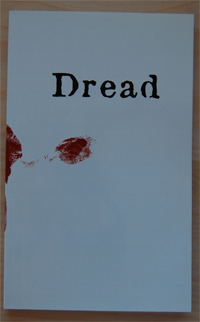
The Perfect Light RPG? Dread.


Role-playing games exist in a problematic black hole. Existing role-players play RPGs, but the hobby isn’t attracting a lot of new players (though D&D 4th Edition appears to be changing that somewhat).

So how to attract new players to the hobby?

Well, last Sunday, I had the chance to run a game of Dread, and it was a revelatory experience. It might be the answer, or at least point the way towards the answer.

Dread contains a very simple system: each player gets a sheet filled with about 9 probing questions about the person they’re going to play in that evening’s entertainment. These questions are usually intrusive, like “Who forgave you just before he died?” and “What childhood toy do you still carry with you, and why?”

While the players are answering their questionnaires, the host (who runs the game) explains the situation in which the characters will be involved, and sets up a JengaTM tower. (For those unfamiliar, Jenga is a tower of wooden blocks, three blocks per level.) In our case, the characters were college students in the middle of a wilderness adventure in the Grand Canyon.

Once the players have filled out their questionnaires, they should have a good feel for the character they’re going to play, and the game begins. The host reveals the initial scene. In our case, the characters woke up in the middle of the night to the screams of their guide, and found him hauled several yards from his shredded tent, badly wounded and delirious.

The players then act out their characters. And here’s where the incredibly simple but remarkably effective system comes in. Whenever a character attempts something difficult–anything from leaping across joists in a burning building to staying calm in the face of a serial killer—the character must make a “pull,” by removing a block from the Jenga tower and placing it on the top of the tower. If a player knocks over the tower, then that player’s character dies.

As you can imagine, characters die a lot in this game.

After a character’s death, the tower is set back up, and three blocks are immediately pulled for every dead character. And the game continues.

So, it’s a game of psychological stress and horror. The three sample stories included in the book cover a werewolf attack during a camping trip (the one we played on Sunday), space marines exploring an alien-infested starship hulk, and a horny-teen slasher film, all perfect for this system.

The Jenga mechanic provides several interesting advantages:

  • You can explain the mechanic in about a minute, to anyone. Those who’ve never played an RPG in their life can get into it immediately.
  • It creates a literary-style wave of rising tension, release, then more tension. Because blocks are pulled after each death, the tension increases on every iteration.
  • The central tower, standing in the middle of the table, is a potent reminder of the deep trouble the players face. When a player makes a pull, conversation dies. Players hold their breath. There’s actual palpable tension.
  • Because there are no numbers, the host has fewer distractions and can focus on the story.

I’ve never had as much fun as I did hosting that game. Everyone enjoyed themselves.

Categories: Role-playing | Leave a comment

Six Months of Tabletop RPG Sales

\"[IMAGE]\"

About six months ago, I started publishing tabletop RPG PDFs under the name Brent P. Newhall\’s Musaeum of Fantastic Wonders, starting with the short adventure War in the Deep in November 2008 and continuing with the sandbox setting The City of Talon in March 2009. I publish through DriveThruRPG, which takes a percentage of each PDF sale. The PDFs themselves are unrestricted.

I\’ve always been a bit frustrated at the lack of real numbers about publishing PDFs online. How much money do these things make?

Here\’s how much I\’ve actually made. Each PDF sells for US$5.00; I get $3.25 of that.

Sales

Product Number of Sales Gross Earnings Net Earnings
War in the Deep 14 $65.00 $45.25
The City of Talon 17 $75.00 $48.75
TOTAL 31 $140.00 $91.00

Month-by-month for War in the Deep, which was first published in November 2008:

Month Number of Sales Gross Earnings Net Earnings
November 2008 4 $15.00 $9.75
December 2008 5 $25.00 $16.25
January 2009 4 $20.00 $13.00
February 2009 0 $0.00 $0.00
March 2009 1 $5.00 $3.25
April 2009 0 $0.00 $0.00
TOTAL 14 $65.00 $45.25

Month-by-month for The City of Talon, which was first published in March 2009:

Month Number of Sales Gross Earnings Net Earnings
March 2009 11 $45.00 $29.25
April 2009 6 $30.00 $19.50
TOTAL 17 $75.00 $48.75

Web Traffic

Total hits for War in the Deep on DriveThruRPG: 3,737.

Unique pageviews for War in the Deep on the Musaeum:

Source Pageviews
ENWorld.org 32
Direct 10
Google searches 7
RPGBloggers.com 4
Others 10
TOTAL 63

The keywords used to find War in the Deep: \”heroic tier adventure\”, \”printable d&d counters\”, \”rpg adventure plots\”, \”rpg adventure writing\”, and \”rpg for commercial use\”

\"[IMAGE]\"

Total hits for The City of Talon on DriveThruRPG: 1,734.

Unique pageviews for The City of Talon on the Musaeum:

Source Pageviews
Google searches 29
RPGBloggers.com 14
Facebook 11
Direct access 8
Others 24
TOTAL 86

The keywords used to find The City of Talon: \”crimes of talon\”, \”brentnewhall\”, and \”role play blogs\”.

Advertising

None.

Marketing

I described each project here on my blog in a couple of different blog posts. I\’m a member of the RPG Bloggers Network, so those posts showed up there.

Analysis

Making just shy of US$100 with no advertising budget is no mean feat. On the other hand, considering the dozens of hours I put into these PDFs, I couldn\’t exactly make a livable wage off this yet.

The biggest surprise is the 32 pageviews from ENWorld, a huge D&D-oriented site. Upon further investigation, I discovered that ENWorld has a wiki page of 4E 3rd Party Publishers (since defunct), and somebody kindly added my Musaeum and War in the Deep there. In writing this entry, I added the City of Talon to that page, so hopefully that\’ll drive some traffic to it.

I find it interesting that the RPG Bloggers network was much more interested in Talon than War in the Deep. This confirms my suspicion that GMs need higher-level creative resources more than they need pre-generated adventures. Note that Talon\’s made almost as much in 2 months as War in the Deep made in 4 months. However, Talon required far more time to create than War in the Deep did.

Plans

I plan to focus on settings. I\’ll continue work on my abandoned underground city setting and my floating city in the sky setting. I plan to publish both in the next six months.

However, given the relatively low time investment in writing an adventure, I\’ll probably publish one more adventure within the next six months. It seems worth it, especially if the adventure\’s fun to build.

Categories: Role-playing | Leave a comment

Seven Lessons Learned from Running a Tabletop RPG with a Big Group

[IMAGE]

We can have up to 10 players at my tabletop gaming group. That’s a lot of people to manage; most groups max out at 5 or so. While I’m trying to get better at splitting the group up with another GM, I’ve had times where I’ve had to run a game wtih 10 players.

A few suggestions:

  1. Notify the next few players in the turn sequence. When you tell somebody that it’s their turn, point to the next person and advise them that they’ll be next. They can then use the upcoming few minutes to prepare their next action.
  2. Enforce turn time limits. Our group is upfront about the fact that, with a large group, we can’t wait for minutes on each person’s turn. In fact, I keep out a one-minute egg timer, which I use on anyone who isn’t ready with their action when their turn starts (myself included).
  3. Avoid combat. “True” role-playing, in the sense of acting out a role, is actually easier for large groups. The group can act off each other. You don’t have to completely eliminate combat, but dropping one or two fights is probably a good idea.
  4. Make combat quick. With 10 people, two fights can chew up the entire session. On the other hand….
  5. Scale your enemies. By the time 9 players have taken a whack at a creature, it might be dead without getting the chance to use that one cool life-draining spell. Just beware making it so tough that one fight takes all night.
  6. Make combat interesting. In a fight with several different kinds of creatures, different players can concentrate on particular enemies.
  7. Pay special attention to quiet players. It’s extremely easy for one or two players to fall through the cracks in a game like this. At least engage them in conversation.

The good news? A big group feels more like a party. A large group can be just as much fun as a small one, especially if big groups are rare. So have fun with it!

Categories: Role-playing | Leave a comment

Skype

A few weeks ago, my role-playing group tried to add a virtual player.

Wait. Back up. One of our regular players went off to college. Worse, she’s one of the best role-players in the group. I pined for her.

For those of you unfamiliar with tabletop role-playing: A bunch of friends sit around a table. One of them lays out a situation, while the others pretend to be people in that situation, and narrate their reactions to the situation.

So, physical presence is important. A simple phone call won’t suffice. Moreover, we play with miniatures laid out on a wet-erase mat to illustrate everyones’ physical placement in the scene (especially relative to the occasional nasty monster). You need to see.

So we decided to try setting up a Skype webcam-based video conference call with her. I brought my laptop, connected to Skype, and placed the laptop on a few books. She came online, I called, she accepted, and after a bit of fiddling with audio and video settings, her head filled the screen.

I was worried. Had been in the weeks leading up to it, and was while I set this up at our table. It’s undoubtedly just my prejudice, but when I think “free videoconferencing,” I think of jerky footage, stuttering audio, and a dropped call every ten minutes. Webcams still kinda suck, my geeky side declaims, and audio/video quality over a college network tends to sound and look like RealVideo streams from 1999. And if we had a mediocre experience, we’d soldier on through the session rather than drop one of our best players. I grit my teeth and prepared to wrestle with technology.

It worked perfectly.

Besides the aforementioned technology issues (especially when we switched laptops, and the second laptop had a microphone worse than mine), we played normally. The technology mainly faded into the background, and we just talked and narrated and had fun.

Of course, it wasn’t exactly like having her in the room. Humans just aren’t used to talking to a flat screen that’s filled with a smiling human head, and she couldn’t pick out everything we said.

This is now simply part of how we play; if you’re physically not there, you can always call in via Skype. And with the second laptop (and a better microphone, hopefully), we can add another distant player.

The technology works.

Categories: Role-playing, Technology | Leave a comment

What is the City of Talon?

[IMAGE]

In the real world, The City of Talon is a role-playing setting. It’s a 107-page PDF that describes a fantasy world, including physical locations within the city, well-known residents, the history of the city, etc. It can be used in pretty much any pseudo-medieval fantasy RPG, and is also a great inspiration for authors; Talon makes for a great setting for a story. The PDF is a US $5 download from DriveThruRPG.com.

Within that document, Talon is a bustling, hectic port-side city. It’s relatively new, and highly mercantile. Duke Malinare runs the city with a strong and very involved hand, but does little to disrupt trade. For money is the lifeblood of Talon.

I’ve developed dozens of characters who live in Talon, from the influential judge Sirrah Mortiss, to commoners like the kind healer Sera, to killers like Alphonse the Slayer.

I’ve laid out dozens of places within Talon, from the elegant hills of Bloodoak Row to Ged’s Slaughterhouse to the Sanctuary of the Nearly Damned to the sprawling Pits beneath the city.

I did it to create a tiny world, and to give people a chance to live in that tiny world for even a few short hours. I did it as a creative exercise, and a chance to make a little money.

And it’s worked. I’ve made a few bucks, and a few folks have checked it out. I’m proud of the document, too; it’s well-organized and contains quite a few helps to potential GMs (including character stats in several different systems). I made sure to include a number of things I find important, such as a full index, a full table-of-contents, and many links and references within the document. If one character description mentions another character, there’s a hyperlink and a page reference right there. I also created some effective, full-color maps.

If you’re interested, feel free to check it out, and let me know what you think.

Categories: Role-playing | Leave a comment

Gunwave Reborn

[IMAGE]

I really need to get to bed right now, but I just couldn’t help sharing this. I’ve just released a serious upgrade to my mecha anime-inspired tabletop RPG system, Gunwave. It’s a fast, fun, exciting game that lets you play angsty teens during an epic space war.

And it’s all free. Check out the PDFs on the official site and let me know what you think. It’s still in beta—need to do a lot of playtesting and get lots of opinions and just generally add some more cool stuff—but it’s playable and fun right now.

Hope you enjoy.

Categories: Role-playing | Leave a comment

The City of Talon

[IMAGE]

I’ve been working on a major role-playing project for the past few months. It’s called the City of Talon, a small book that describes a busy portside fantasy city, suitable for any fantasy role-playing game. It can even be raided for ideas for short stories and novels.

It’s a grand experiment. I love the creative side of role-playing, and I wanted to try my hand at creating a city that other people could include in their own games.

A document like this is very different from the articles and stories I’m used to writing. While fictional, it’s very structured. It begins with an introduciton to the city, laying out its basic governing structure, level of technology, and overall feel. It then proceeds to a description of various places within the city—taverns, clubs, dives, docks, etc.–in some detail, including overall size and frequent patrons. I even drew maps for 9 major locations using the free vector graphics program Inkscape.

The book then lists dozens of famous (and infamous) denizens of the city, from nobles to paupers, just and unjust. I wanted these characters to be easy to imagine and role-play, so I ensured each had at least a motto, a physical quirk, and some background.

There’s much more to a city than buildings and people, of course, so I also created short sections on major vices in the city, political organizations, and possible stories and adventures.

And finally, because people may want to fit these characters into their role-playing sessions, I mapped out the top dozen characters in three RPG systems (D&D 4th Edition, D&D 3.5, and GURPS). This took a lot of time, but I hope will be particularly useful to GMs as they narrate their players through the city.

It ended up at 50 pages, and I learned a lot. I’m already starting work on another setting, this time a large floating city buzzing with airships and intrigue, and I know how to make it even better than Talon.

Anyvay. If you’re interested in Talon, for role-playing or as a spark for writing projects (lots of people and places to plagiarize), it’s a $5 PDF at DriveThruRPG, or drop me a line and I’ll send you a copy.

Let me know what you think!

Categories: Role-playing | Leave a comment